Identifying Tokens of the Innocenti Archive: a Unique Heritage to be Protected and Promoted
23 December 2025
Area di attività
The precious heritage of the Innocenti Archive was the focus of a meeting organised by the Archival and Bibliographic Superintendence of Tuscany, in collaboration with the Ministry of Culture.
On 10 December, Antonella Schena, Head of the Archive, Museum and Cultural Activities Service at the Istituto degli Innocenti, and Lucia Ricciardi, the Institute's archivist, illustrated the history of the identifying tokens and the measures the Institute takes to protect and promote this extraordinary heritage to an audience of archivists, cultural professionals and citizens. Below is an extract from their speeches.
What Makes the Heritage of the Istituto degli Innocenti’s Identification Tokens So Unique and Precious?
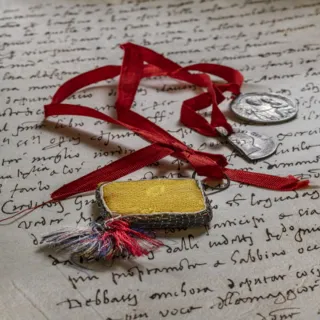
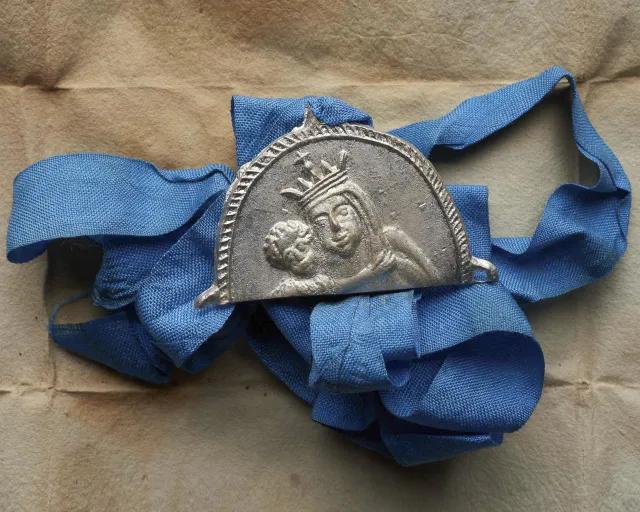
The Istituto degli Innocenti preserves a heritage of more than 40,000 identifying tokens: an exceptionally large and well-preserved collection of small objects left behind by parents who entrusted their children to the Ospedale degli Innocenti. The bulk of this heritage dates back to the 19th and early 20th century (1827-1921); for earlier periods, there are almost only descriptions in the entry registers (wet nurses and children) or rare artefacts preserved in the baptismal files (late 17th century).
The value of the identifying tokens did not lie in the economic worth of the objects - coins, medals, rosaries, rings, buttons, or ribbons, often broken or divided in half - but in their function as tangible evidence for the possible recognition of children by their parents. Although not required by the Administration, for a long time the tokens were the means through which a family, in possession of the other half of the object, could in the future search for and reunite with a previously abandoned child.
The identifying tokens therefore embody a profound historical and human value: they tell individual stories, bear witness to the hope and promise of reunification, or, in many cases, represent an act of love or farewell by families in distress. They also offer an exceptional insight into the history of child reception and care, as well as into the everyday life and beliefs of Florentine and Tuscan families - and beyond - over the centuries.
What Conservation Measures Has the Institute Put in Place in Recent Years?
Among the main safeguarding measures is the inventorying of the collection, an ambitious and complex project shared with and authorised by the Archival and Bibliographic Superintendency of Tuscany. The inventory was carried out within the ArDEs database for archival description, in accordance with the ISAD(G) and ISAAR(CPF) standards.
Two specific archival series were created - one relating to the tokens from 1827 to 1889 and another for those from 1890 to 1921 - integrated into the existing inventory structure. Where necessary, the tokens underwent restoration and cleaning; others were rehoused in conditions ensuring a higher level of conservation protection. All operations were carried out in full compliance with regulations and with the utmost care not to sever the archival bond.
What initiatives for their appreciation and promotion has the Institute undertaken in recent years?
Appreciation and promotion of this heritage have been developed through a range of initiatives.
- These include the digitisation of the tokens and their inclusion in the digital showcase, within which the collection Segnali gettatelli has been created, currently making 168 tokens available for consultation. This work was made possible thanks to the Adopt a Token campaign promoted by the Foundation of the Istituto degli Innocenti, and to a project sponsored by the Calliope Arts Foundation, dedicated to inventorying, digitising, and restoring approximately 120 identifying tokens belonging to girls admitted to the Ospedale degli Innocenti between 1900 and 1921. As a result of this process, last November the exhibition “Girls in the Innocenti Archive: 1900–1921” was inaugurated in the twentieth-century section of the Museo degli Innocentiand will be open to visitors until 8 March 2026.
- Since the opening of the new Museum in 2016, a permanent installation dedicated to the identifying tokens has been included in the History of the Museum section, displaying 140 tokens, mainly coins and medals.
- Since 2023, visitors have also been able to see the exhibition “And The Other Half I Shall Keep”, initially conceived as a temporary exhibition and now made permanent thanks to agreements with the Archival Superintendency. These agreements provide for a six-monthly rotation of exhibits and documents in order to ensure their proper preservation.
- In agreement with the relevant Superintendencies (Archival and Cultural Heritage), three twentieth-century signs were loaned for the exhibition organised by the Santa Casa da Misericordia in Lisbon, entitled Children of All... Children of Whom? The Foundlings of the Lisbon Wheel, on the occasion of the tokens' candidature for the UNESCO Memory of the World Register. Several international institutions participated in the bid, together with the Istituto degli Innocenti.
What Does the Cooperation with the Superintendency Involve?
The relationship with the Archival Superintendency is an institutional one, established under Italian cultural heritage law. The Superintendency is responsible for safeguarding and monitoring the archival and bibliographic heritage of public and private institutions of particular cultural interest, while also promoting and popularising it.
Within this framework, the Istituto degli Innocenti has always benefited from constant and highly qualified technical and cultural support, experimenting with innovative solutions, particularly in the inventorying and digitisation of the identifying tokens - a heritage that is both fragile and strongly emblematic of the history of foundling homes. The project on the identifying tokens has also provided an important opportunity to strengthen relationships with other institutions, such as the Superintendency for Archaeology, Fine Arts and Landscape, which oversees the loan and restoration of objects.
This collaboration has been instrumental in developing concrete and innovative methods for safeguarding and promoting a unique cultural heritage, which continues to tell a story central to the memory of childhood, care and reception.
Last update: 03/13/2026 - 14:58